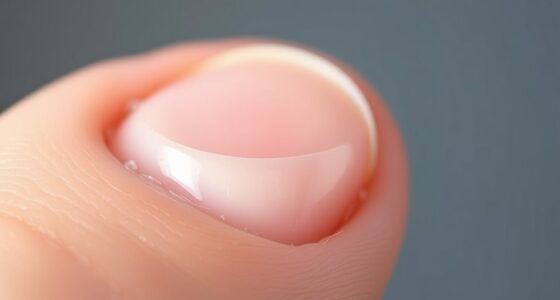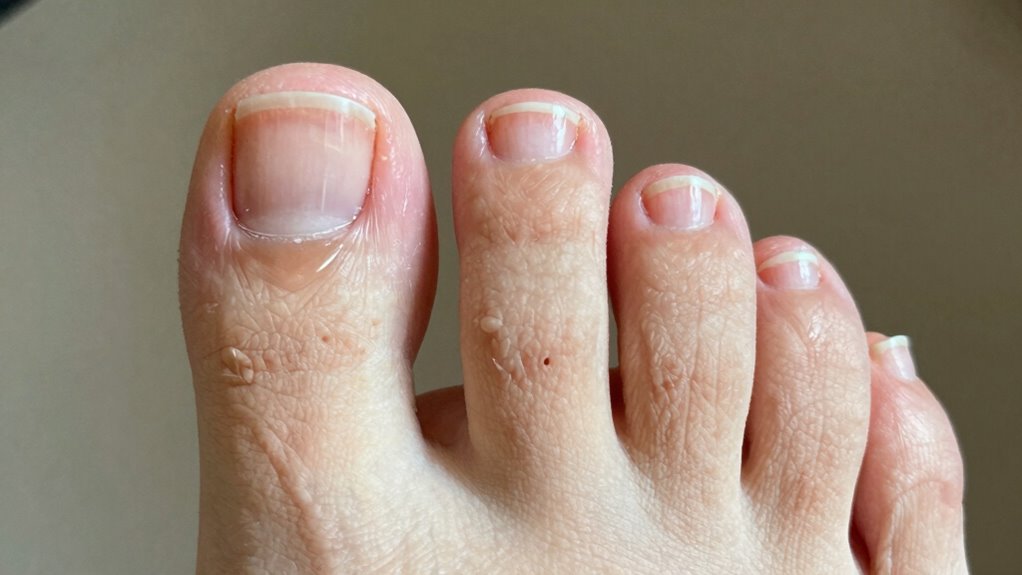

Toenails grow slower than fingernails because they receive less blood flow and daily stimulation, which are key for faster growth. Your fingers are constantly used and exposed to environment factors that promote quicker growth. In contrast, toenails are more protected and get less circulation, slowing down their development. Age, health, and nutrition also play roles. If you want to understand the full science behind this difference, keep exploring how these factors impact nail growth.

Get beauty and skincare favorites delivered free with Prime
- Fast, free delivery on millions of items
- Prime Video, Amazon Music and more included
- Member-only deals all year
Key Takeaways
- Toenails receive less blood circulation compared to fingernails, reducing nutrient delivery for growth.
- The protective environment of toenails, with less stimulation, slows their growth rate.
- Age-related circulation decline affects toenail growth more noticeably than fingernails.
- Toenails are less exposed to environmental stimuli, which can promote faster growth in fingernails.
- Nutritional intake and overall health impact toenail growth more significantly due to their slower development.
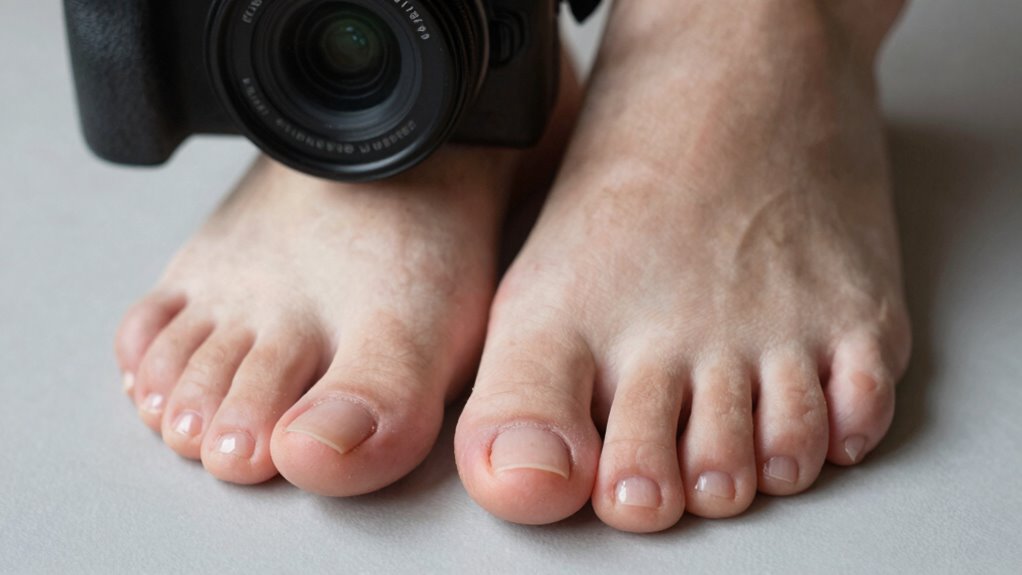
While both toenails and fingernails are made of keratin and serve protective functions, they grow at different rates and patterns. You might notice your fingernails seem to grow quickly, often visibly lengthening within a week or two, while toenails take much longer to show noticeable growth. This difference stems from how each set of nails is used and the blood circulation they receive. Fingernails are constantly exposed to the environment, which encourages faster growth, whereas toenails are more protected and less stimulated.
Fingernails grow faster than toenails due to usage and blood circulation differences.
You may also observe variations in nail pigmentation, which influences how healthy and vibrant your nails appear. Healthy nails usually have a consistent color, but nail pigmentation can change due to factors like age, health conditions, or injuries. When toenails grow slowly, they can sometimes develop discoloration or dark spots, especially if nail infections occur. Nail infections, whether fungal or bacterial, tend to develop more easily in toenails because they grow slower and are often exposed to moisture from shoes and socks. These infections can cause discoloration, thickening, and even crumbling of the nail, making it harder to detect early on. Additionally, blood circulation plays a crucial role in nail health and growth rates, helping to explain why fingernails typically grow faster than toenails.
Moreover, factors such as age and overall health can significantly influence this growth disparity, as they impact circulation and nutrient delivery to the nails. Proper nutrition is also essential for maintaining healthy and strong nails, especially in the case of slow-growing toenails. Furthermore, nutrient intake can also affect the growth and strength of both toenails and fingernails, emphasizing the importance of a balanced diet for nail health.
As an affiliate, we earn on qualifying purchases.
Frequently Asked Questions
Do Toenails Grow Faster at Certain Times of the Year?
Yes, toenails tend to grow faster during warmer months due to seasonal variations and environmental factors. Increased blood circulation in summer boosts nail growth, while colder months slow it down. You might notice your toenails grow more quickly in spring and summer because of these changes. Humidity, sunlight, and activity levels also influence growth rates, making toenail growth vary throughout the year based on environmental conditions.
Can Nail Polish or Treatments Affect Toenail Growth Rate?
Nail polish and treatments generally don’t affect your toenail growth rate directly. However, frequent use of harsh nail polish or treatments can weaken your toenails over time, potentially slowing their growth due to damage or infection. If you want healthy toenails that grow well, give your nails regular breaks from polish and opt for nourishing treatments. Proper care helps make sure your nails stay strong and grow at their natural pace.
Are There Specific Health Conditions That Slow Toenail Growth?
Sure, if you’re feeling like your toenails are on strike, it might be due to health conditions. Nutritional deficiencies, like lacking zinc or iron, can slow growth. Circulatory issues, which make blood flow sluggish, also dampen nail progress. So, if your toenails are growing as slowly as a snail’s pace, it’s time to check in with a doctor—your nails might be trying to tell you something’s off.
How Does Age Influence Toenail Versus Fingernail Growth?
As you age, both toenail and fingernail growth slow down, but toenails tend to experience a more noticeable decline. Genetics play a role in how quickly your nails grow, as do the health of your nail beds. You might notice your toenails grow even slower if your nail beds become less healthy over time. Overall, aging reduces blood flow and cell regeneration, which impacts nail growth rates for both fingernails and toenails.
Does Footwear Type Impact Toenail Growth Speed?
Footwear impact can influence toenail growth speed, especially if your shoes are tight or poorly fitted. Tight footwear puts pressure on your toenails, restricting blood flow and potentially slowing their growth. On the other hand, comfortable, well-fitting shoes promote better circulation, encouraging healthier toenail growth. So, choosing the right footwear not only prevents issues like ingrown nails but also supports ideal toenail development.
As an affiliate, we earn on qualifying purchases.
Conclusion
So, now you know why toenails grow slower than fingernails. It’s all about blood flow, daily use, and the way your body prioritizes nail growth. Keep in mind, patience is a virtue here — nails won’t grow overnight. Just remember, you can’t rush a good thing, so give your toenails time to catch up. With a little care, they’ll grow strong and healthy, proving that sometimes, slow and steady wins the race.
nail fungus treatment for toenails
As an affiliate, we earn on qualifying purchases.
As an affiliate, we earn on qualifying purchases.
As an affiliate, we earn on qualifying purchases.
Fall Picks
fall essentials
As an affiliate, we earn on qualifying purchases.