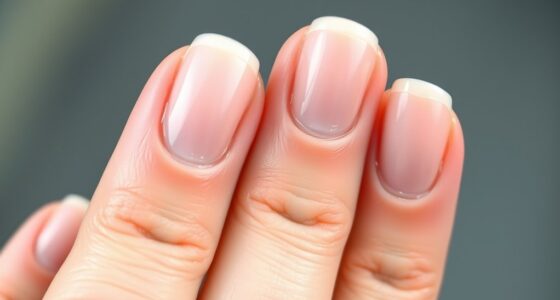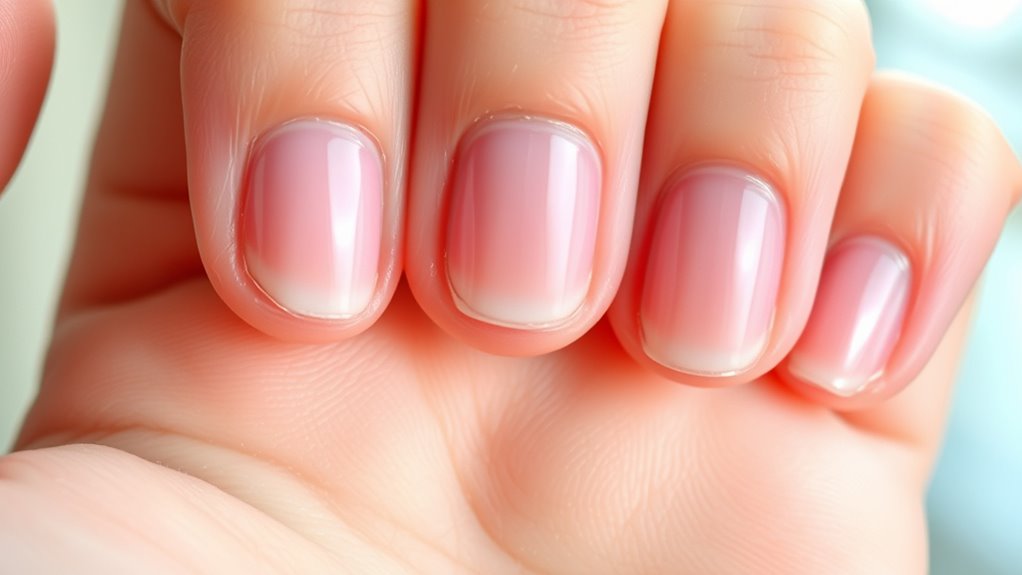
Your genetics play a big role in how strong, thick, and resilient your nails are. Inherited traits influence keratin and collagen production, which directly impact nail durability and flexibility. Some people inherit genes that make their nails naturally tougher and less prone to breaking, while others may have weaker genetics, leading to thinner, more fragile nails. Understanding these genetic factors can help you personalize your nail care, and you’ll discover even more about the science behind strong nails as you continue.
Key Takeaways
- Genetic inheritance influences keratin and collagen production, directly affecting nail strength and resilience.
- Family traits determine baseline nail thickness, flexibility, and susceptibility to damage.
- Specific genes regulate natural nail hardness and response to environmental stressors.
- Hereditary conditions can predispose individuals to stronger or weaker nails.
- Genetic makeup impacts how effectively nails respond to treatments and protective habits.
The Role of Genetic Inheritance in Nail Composition
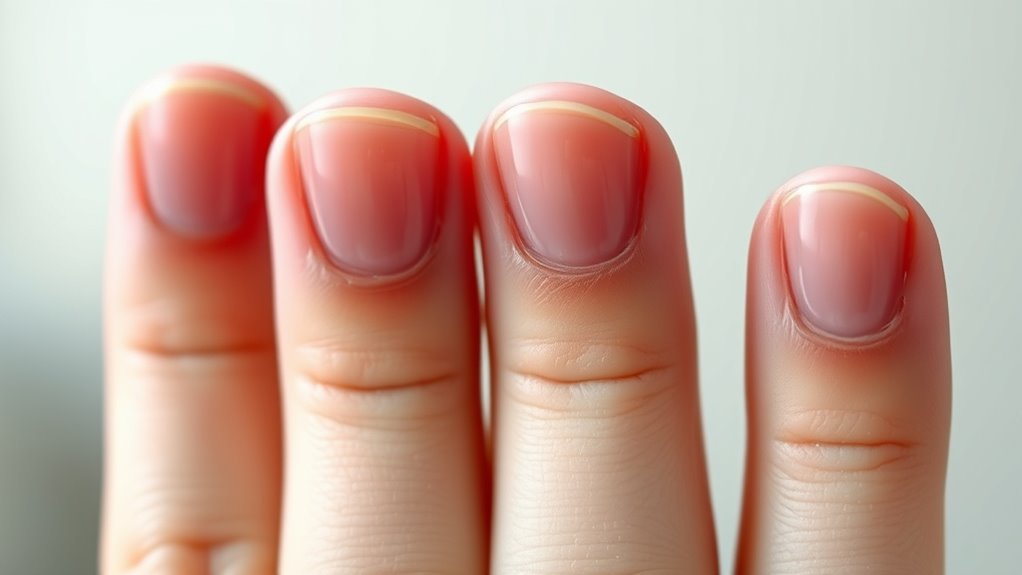
Genetic inheritance plays a significant role in determining the structure and strength of your nails. If your family members have naturally strong nails, you’re more likely to experience similar traits. This influences how your nails respond to treatments like nail polish or nail art, which can sometimes weaken weaker nails. Your genetics also affect nail thickness, resilience, and how easily they chip or break. While applying nail polish and experimenting with nail art can enhance appearance, they won’t change your genetic makeup. Understanding your inherited nail characteristics helps you choose the right products and care routines. For example, if you have naturally fragile nails, opting for gentle formulas or strengthening treatments is essential. Additionally, certain genetic factors can predispose individuals to specific nail conditions or vulnerabilities, emphasizing the importance of personalized nail care. Ultimately, your genetic traits set the foundation for your nails’ overall health and appearance.
How Genetics Influence Nail Growth Rate and Density
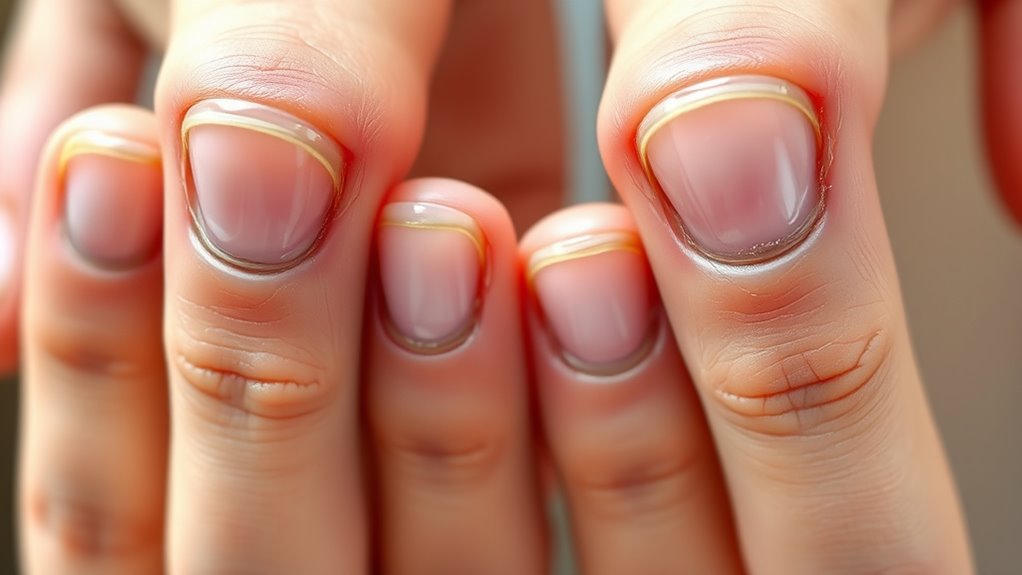
Your genetics play a significant role in how quickly your nails grow and how dense they are. Hereditary factors influence the rate at which new cells form and the overall strength of your nail structure. Understanding these genetic traits can help you better predict and manage your nail health. For example, certain genetic markers associated with Nail Density can indicate a person’s likelihood of having stronger nails.
Genetic Nail Composition
The growth rate and density of your nails are strongly influenced by genetic factors that determine how quickly your nail cells divide and how densely packed they are. These genetic traits affect the overall strength and appearance of your nails. For example, some people inherit a tendency toward nail discoloration, which can make nails appear dull or yellowish, and nail deformities, which can cause ridges or abnormal shapes. Your genetic composition influences how much keratin your nails produce and how well they adhere to the nail bed. If your genes favor dense, well-structured nails, you’re more likely to have naturally stronger nails. Conversely, genetic predispositions to certain nail issues can make nails more prone to breakage or deformities, impacting their overall health and appearance.
Hereditary Growth Factors
Hereditary factors play a crucial role in determining how quickly your nails grow and how dense they are. If your family members have fast-growing, thick nails, you’re likely to share those traits. Your genetics influence the rate at which new nail cells form and how strong they are. This means you might notice some people need fewer visits to beauty salons to maintain healthy nails or prefer nail polish that lasts longer. Conversely, slower growth or thinner nails could require more frequent care or specialized treatments. Understanding your hereditary growth factors can help you tailor your nail care routine effectively. While you can’t change your genetics, knowing these influences allows you to choose the right products and techniques to enhance your nails’ natural strength and growth. Additionally, Nail Growth Factors can vary based on hereditary influences, impacting overall nail health and appearance.
The Impact of Specific Genes on Nail Strength
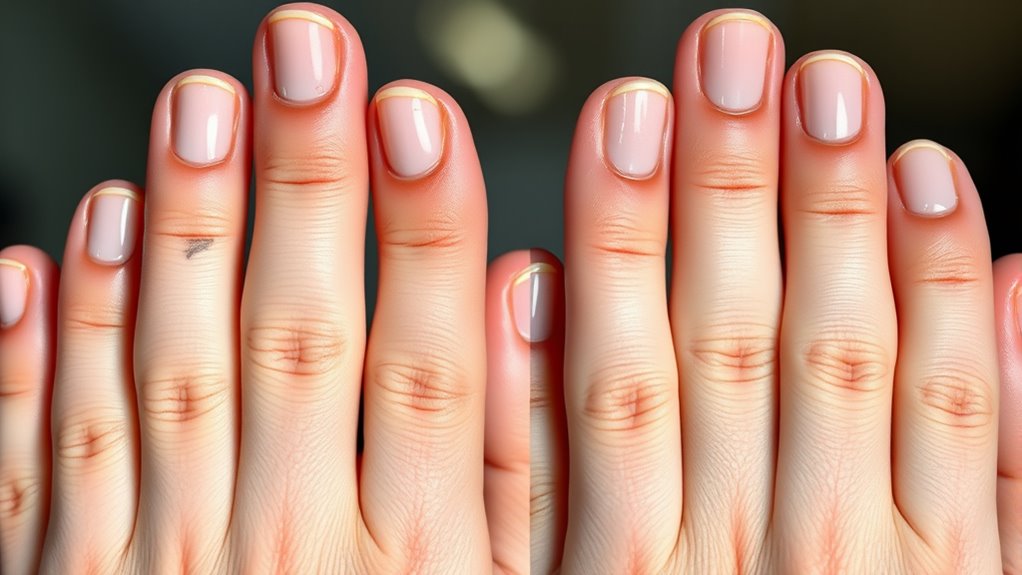
Your nail strength is directly affected by specific genes that influence keratin production, collagen synthesis, and nail structure. Variations in these genes can make your nails more resilient or prone to damage. Understanding these genetic factors helps explain why some people have naturally stronger nails than others. Additionally, the presence of certain alleles can affect the overall genetic expression related to nail integrity and durability.
Keratin Production Genes
Genes that regulate keratin production play a crucial role in determining nail strength. Your genetic makeup influences how efficiently your body produces keratin, the key protein in nails. If your genes promote high keratin levels, your nails tend to be stronger and less prone to breakage. Conversely, weaker keratin production can lead to brittle nails. To enhance your nails, you might consider salon treatments or choosing the right nail polish, but your genetics set the foundation. Here are four key points:
- Variations in keratin genes affect nail resilience.
- Stronger keratin production results in thicker, healthier nails.
- Genetic differences influence how nails respond to external products.
- Understanding your genetics helps tailor nail care routines for ideal strength.
- Home essentials like nourishing oils and supplements can support nail health alongside your genetic predispositions.
Collagen Synthesis Variability
While keratin production influences nail resilience, collagen synthesis also plays a vital role in maintaining nail strength and flexibility. Your genes affect how efficiently your body produces collagen, impacting nail integrity. If your collagen synthesis is slower or less effective, your nails might be weaker and more prone to damage. Proper cuticle care and avoiding excessive nail polish removal help protect your nails from collagen depletion caused by harsh chemicals. Some people naturally have genetic variations that boost collagen production, giving their nails added durability. Conversely, other genetic factors can impair collagen synthesis, making nails more fragile. Understanding your genetic makeup can guide you in adopting targeted nail care routines, such as nourishing your cuticles and choosing gentle polish removers, to support ideal collagen levels and nail strength. Additionally, glycolic acid exfoliating toner can help improve overall skin and nail health by promoting cell turnover and enhancing absorption of nourishing treatments.
Genetic Nail Structure
Certain genes directly influence the structure and strength of your nails by regulating the production of key proteins and enzymes. Your genetic makeup determines nail thickness, flexibility, and resilience, impacting overall nail aesthetics and nail polish compatibility. Variations in genes related to keratin production, for example, can lead to stronger, more durable nails. Here’s what genetics can influence:
- Keratin fiber density, affecting nail hardness and resistance.
- Enzymes responsible for nail growth and repair.
- The overlap of nail plates, influencing breakage tendency.
- The presence of specific proteins that enhance flexibility and prevent splitting.
- Nail health and appearance can also be impacted by genetic factors, influencing susceptibility to conditions like brittle nails or fungal infections.
Understanding these genetic factors helps explain why some people naturally have stronger nails and better nail aesthetics, making nail care routines more tailored and effective.
Variations in Nail Keratin and Their Genetic Roots

Variations in nail keratin, the primary protein that gives nails their strength and resilience, are directly influenced by genetic factors. Your genes determine how keratin proteins are produced and structured, affecting nail durability. Some people naturally have more pigmented nails, leading to subtle variations in appearance, which are also linked to genetics. Additionally, genetic aging processes influence keratin composition over time, causing changes like thinning or brittleness. These variations can be inherited or develop gradually, impacting how your nails grow and respond to environmental stressors. Understanding these genetic influences helps explain why some individuals have stronger, more resilient nails while others may experience fragility or aesthetic differences. genetic factors play a vital role in shaping your nails’ unique characteristics.
Genetic Factors That Affect Nail Disease Susceptibility
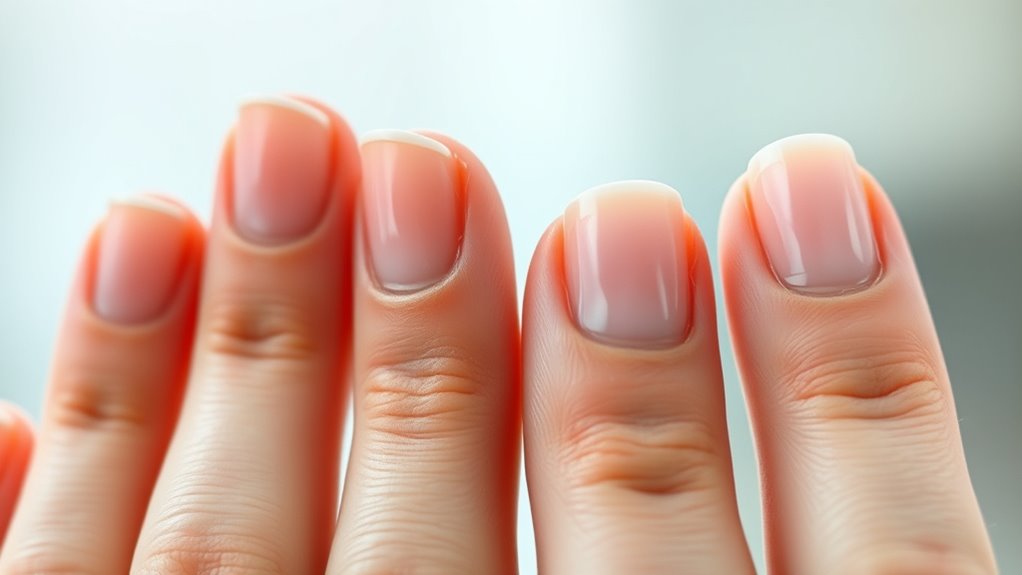
Your genetic makeup doesn’t just influence nail appearance and strength; it also plays a significant role in your susceptibility to nail diseases. Genes can determine how your nails react to factors like infections or environmental stress. This means some people are naturally more prone to conditions like fungal infections or psoriasis affecting nails. Additionally, regular exposure to environmental stressors can further impact nail health depending on your genetic predisposition. Consider these factors:
- Genetic predisposition to immune responses can make you more vulnerable to nail infections.
- Variations in genes related to keratin production affect your nails’ resilience against damage.
- Certain inherited traits may increase sensitivity to irritants like nail polish or nail art chemicals.
- Your genes can influence how your nails recover from trauma or fungal invasion.
Knowing this can help you take proactive steps to protect your nails from disease.
The Relationship Between Genetic Traits and Nail Resilience
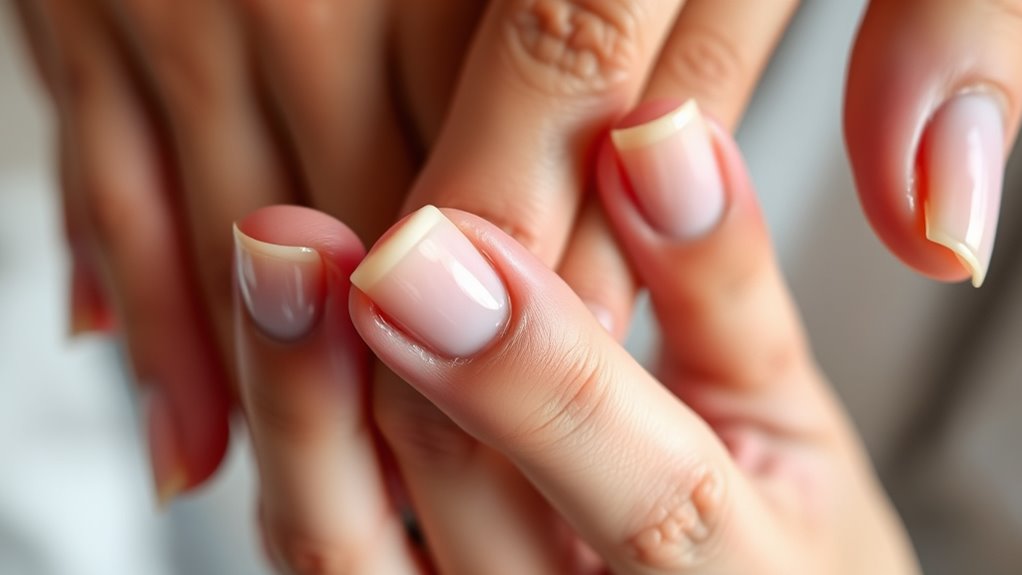
Genetic traits play a crucial role in determining how resilient your nails are to everyday stress and injury. If you have strong genetic predispositions, your nails are naturally tougher, resisting breakage even with frequent nail polish and nail art. Conversely, weaker genetics may make nails more prone to splitting or peeling. These traits influence structural proteins like keratin, affecting overall durability. For example, some people can handle regular nail polish without damage, while others need extra care. Understanding your genetic makeup can help you choose protective strategies. Here’s a quick visual:
| Trait | Effect on Nails | Impact on Nail Art and Polish Use |
|---|---|---|
| High keratin | Strong, resilient nails | Less damage from nail polish |
| Low keratin | Fragile, prone to splitting | More careful application needed |
| Quick growth | Faster nail renewal | Easier to maintain nail art |
| Slow growth | Longer-lasting nail designs | Less frequent touch-ups |
Hereditary Conditions That Enhance or Weaken Nails
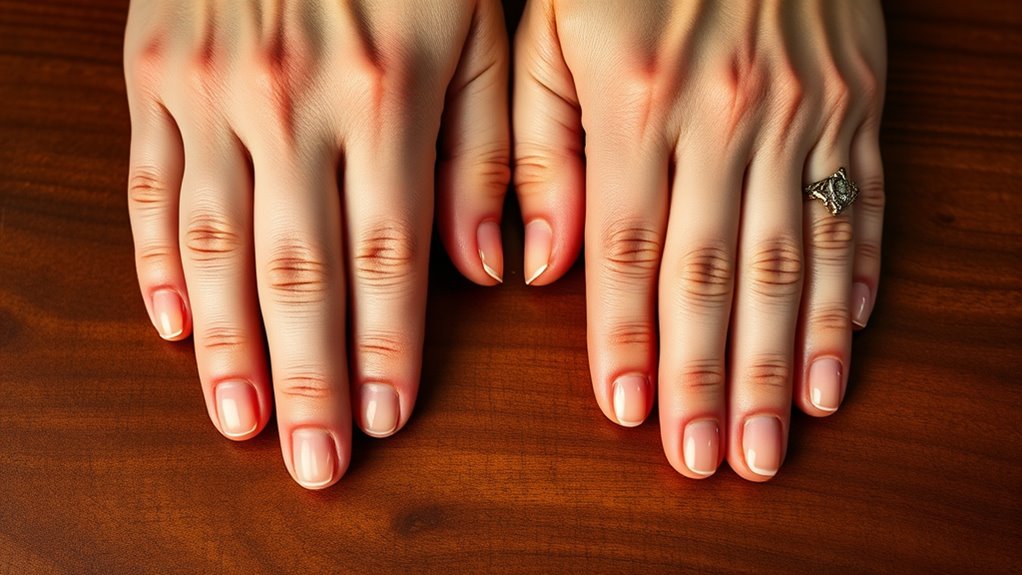
Certain hereditary conditions can substantially influence nail strength, either fortifying them or making them more fragile. These genetic traits affect nail composition and growth, impacting how you care for them. For example:
- Onychodystrophy can cause nails to become thickened or misshapen, challenging your favorite manicure techniques.
- Lichen planus may weaken nails, making nail polish application tricky and prone to chipping.
- Psoriasis can lead to pitting or cracking, requiring gentle nail care and careful removal of nail polish.
- Genetic brittle nail syndrome results in fragile nails that break easily, making it hard to maintain a polished look.
- Understanding these hereditary conditions can also benefit from insights into biological processes, helping you adapt your nail routine, choosing suitable nail polish and manicure techniques to protect and enhance your nails.
The Interaction Between Genetics and Environmental Factors in Nail Health
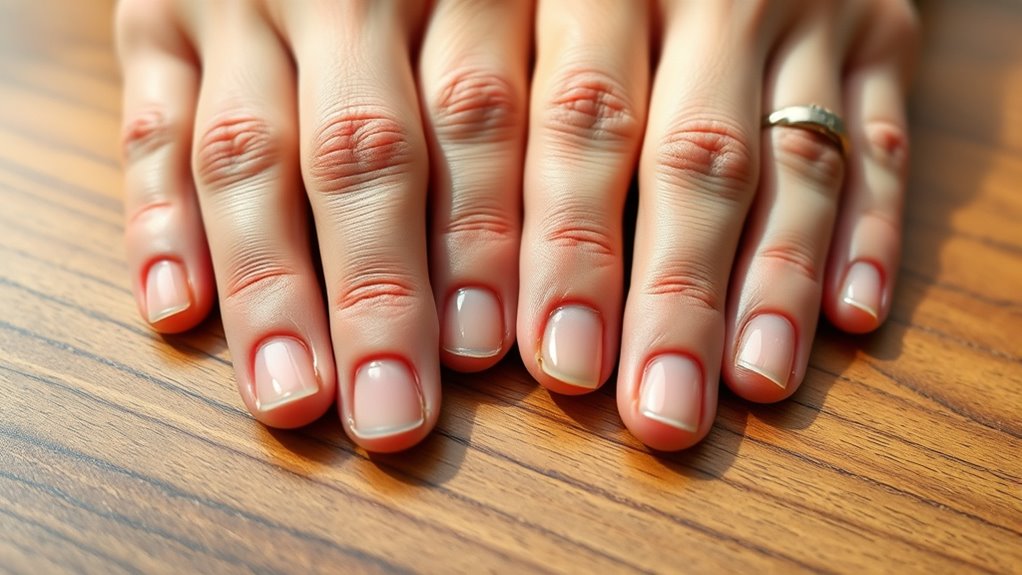
While genetics set the foundation for nail health, environmental influences substantially shape their strength and appearance. Your daily lifestyle habits, such as nutrition, hydration, and exposure to harsh chemicals, can enhance or weaken nails regardless of genetic predisposition. For example, consistent use of moisturizers and avoiding prolonged contact with water or cleaning agents helps protect nails from damage. Poor nutrition, like insufficient protein or vitamins, can compromise nail integrity even if your genetics favor strong nails. Environmental factors also include external stresses like pollution or climate extremes that can cause brittleness or splitting. By adopting healthy lifestyle habits—such as wearing gloves when cleaning or using nail-strengthening products—you support your genetic potential and promote healthier, more resilient nails.
Future Directions in Genetic Research for Nail Care
Advancements in genetic research hold promise for transforming nail care by enabling personalized approaches to maintaining or improving nail health. As research progresses, you may soon benefit from targeted strategies tailored to your genetic makeup. This could include genetic counseling to identify specific risks or deficiencies affecting nail strength. Future developments might also lead to personalized treatments designed to enhance nail resilience based on your genetic profile.
Consider these future directions:
- Identifying genetic markers linked to nail health for early intervention.
- Developing customized skincare products based on your DNA.
- Using gene editing technologies to correct genetic weaknesses.
- Offering personalized nail care plans through genetic counseling.
These innovations will help optimize nail health by integrating genetics into everyday care.
Frequently Asked Questions
Can Genetics Determine How Quickly My Nails Grow?
Yes, genetics can influence your nail growth rate. Your genetic makeup determines how quickly your nails grow, affecting factors like nail thickness and strength. If you notice your nails grow faster or slower than others, it’s likely due to genetic influence. While lifestyle and nutrition also play roles, your genes set the baseline for your nail growth rate, making some people naturally faster or slower growers.
Are There Inherited Conditions That Specifically Improve Nail Strength?
Yes, certain inherited conditions can specifically improve nail strength. These conditions follow specific inheritance patterns, often involving genes that influence keratin production, which is essential for nail strength. Variations in gene expression can lead to stronger, more resilient nails. If you have a family history of such traits, it’s likely your inheritance pattern favors better nail health, giving you naturally stronger nails due to your genetic makeup.
How Do Genetic Differences Affect Susceptibility to Nail Infections?
Your genetic makeup can dramatically influence your susceptibility to nail infections, acting like a fortress or a sieve. Variations in nail pigmentation and nail bed shape might make your nails more vulnerable or resistant. If your nail bed is uniquely shaped, it could trap moisture and bacteria, increasing infection risks. Conversely, certain pigmentation patterns can signal stronger defenses. Understanding these differences helps you take targeted steps for healthier, infection-resistant nails.
Is Nail Strength Influenced by Multiple Genes or Just One?
Nail strength is influenced by multiple genes, not just one. Your genetic pathways control various factors like keratin production, which affects nail durability, and nail pigmentation, which can hint at underlying genetic traits. These combined genetic influences determine how strong your nails are. So, it’s a complex interplay of different genes working together, rather than a single gene, that shapes your nail strength.
Can Genetic Testing Predict Future Nail Health Issues?
You can’t predict nail health issues with absolute certainty, but genetic testing can give you a head start. By analyzing genetic markers, you can spot potential vulnerabilities that may affect your nails down the line. It’s not a crystal ball, but it helps you stay one step ahead. Staying proactive about nail health, especially if your genetics suggest concerns, can make all the difference in maintaining strong, healthy nails over time.
Conclusion
Your genetics play a significant role in determining how strong and resilient your nails are. While you can’t change your genes, understanding their influence can help you adopt better nail care habits. Are you making the most of this knowledge to protect and strengthen your nails? By blending genetic awareness with proper care, you can enhance your nail health naturally. After all, isn’t it worth leveraging what your genes have already provided for stronger, healthier nails?