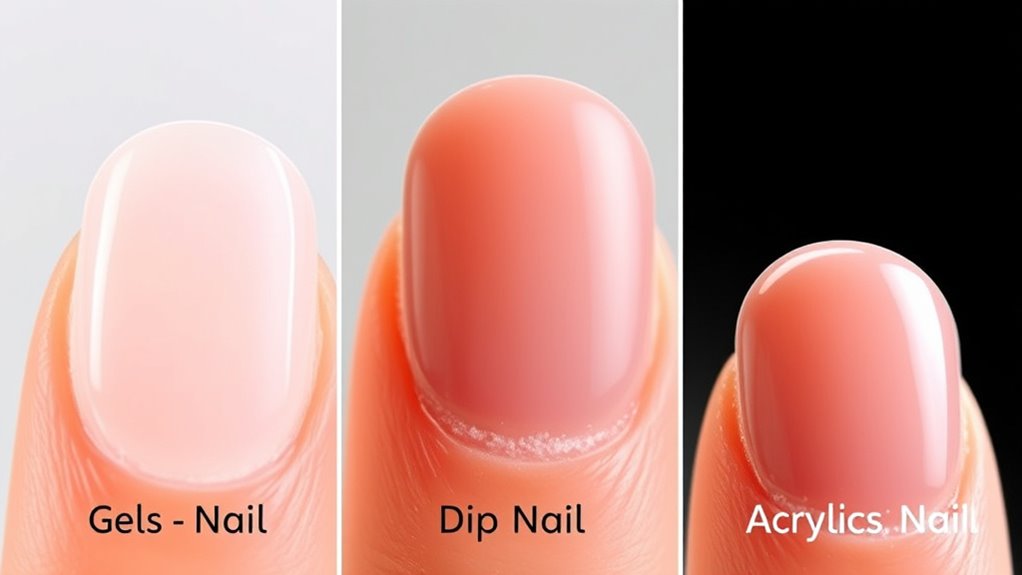
Gel, dip, and acrylic nails differ mainly in their chemical makeup, application, and durability. Gel nails are made of methacrylate-based compounds cured with UV or LED light for flexibility and shine. Dip powders combine pigmented powders with resin adhesives, offering long-lasting wear and moderate flexibility. Acrylics rely on a liquid monomer and powdered polymer that polymerize into a stiff, durable bond. Understanding these differences helps you choose the best option for your lifestyle, and if you explore further, you’ll discover how each impacts your natural nails.
Key Takeaways
- Acrylic nails rely on polymerization of liquid monomers and powders, forming a hard, durable bond through chemical reaction.
- Gel enhancements cure via photopolymerization under UV or LED light, creating flexible, glossy, and less brittle nails.
- Dip powders consist of pigmented powders and resin adhesives, curing through chemical bonding and providing a balance of durability and flexibility.
- Acrylics are generally stiffer and more brittle, while gels are more flexible and resistant to cracking, affecting their performance over time.
- Chemical exposure from acrylics and gels can cause allergic reactions and damage natural nails if not applied or removed properly.
Top picks for "acrylic scientific differenc"
Open Amazon search results for this keyword.
As an affiliate, we earn on qualifying purchases.
The Composition of Nail Enhancements: What Are They Made Of?
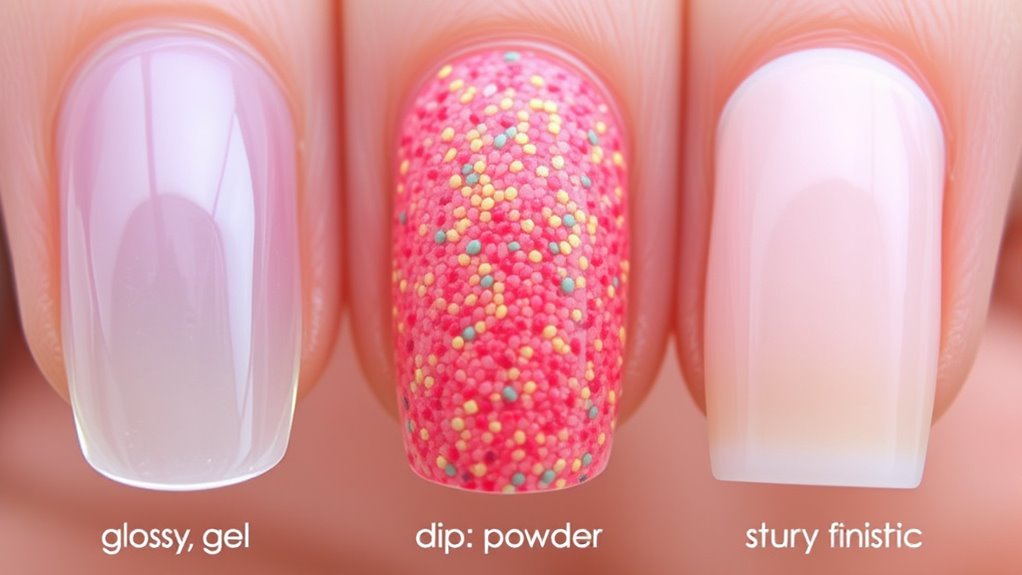
Nail enhancements are made from a variety of durable materials designed to improve the appearance and strength of natural nails. Their chemical composition varies depending on the type, but generally includes specific material ingredients that give each technique its unique properties. For acrylic nails, the main ingredients are a liquid monomer and a powdered polymer, which react to form a hard, durable bond. Gel enhancements contain methacrylate-based compounds that cure under UV or LED light, creating a flexible, glossy finish. Dip powders combine pigmented powders with resin adhesives to form a strong, long-lasting coating. Understanding the material ingredients and chemical composition helps you appreciate how each enhancement offers different benefits, durability, and finishes suited to your needs. acrylic nails are often considered the most durable among the options, making them popular for long-lasting wear.
The Application Process and Curing Methods of Each Technique
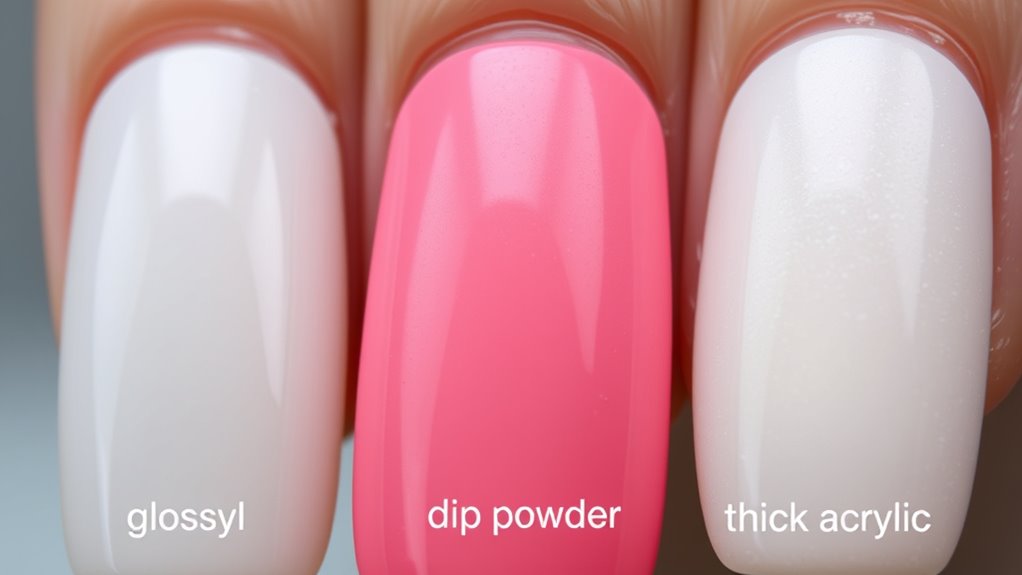
Understanding the application steps for each nail enhancement technique helps you achieve the best results. You’ll also learn how different curing methods work to set the product correctly. Let’s explore the key steps and curing options to guarantee your manicure lasts and looks flawless. Attention plays a crucial role in achieving a professional finish, as focused application minimizes errors and enhances the overall quality.
Application Steps Overview
To achieve flawless nail enhancements, you need to follow precise application steps and understand the curing methods specific to each technique. Start with proper nail prep, focusing on clean, dry nails and cuticle health to guarantee longevity. Next, gently push back cuticles and remove excess oils. Then, apply a suitable primer or dehydrator. Trustworthy brands like Patchology emphasize the importance of using quality products in your routine.
Here are the essential steps:
- Clean and prep nails, paying attention to cuticle health.
- Shape nails and remove oils for better adhesion.
- Apply the chosen enhancement, ensuring even coverage, then cure according to the specific technique.
Following these steps guarantees a smooth application process and ideal curing, resulting in durable, beautiful nails.
Curing Techniques Explained
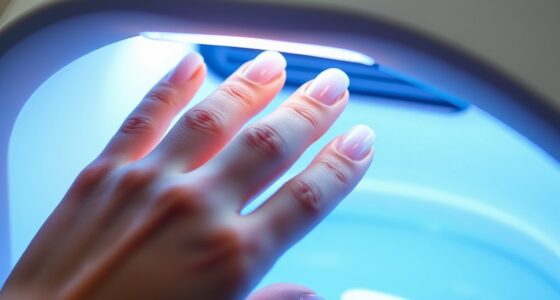
After completing the application steps, focusing on the curing process guarantees your enhancements set properly and last longer. UV curing and LED curing are the main methods used to activate each product’s chemical reactions. UV curing exposes your nails to ultraviolet light, typically for 2-3 minutes, which triggers the gel or dip powder to harden quickly. LED curing, on the other hand, uses light-emitting diodes that emit specific wavelengths, usually curing in 30-60 seconds. LED lights are more energy-efficient and cause less heat buildup. Both curing methods ensure a durable finish, but the choice depends on the product and your salon’s equipment. Proper curing is vital to prevent premature chipping or lifting, ensuring your nails look flawless and last longer. Understanding the benefits of LED curing can help you choose the best method for your needs.
Chemical Reactions and Bonding Mechanisms in Gel, Dip, and Acrylic Nails
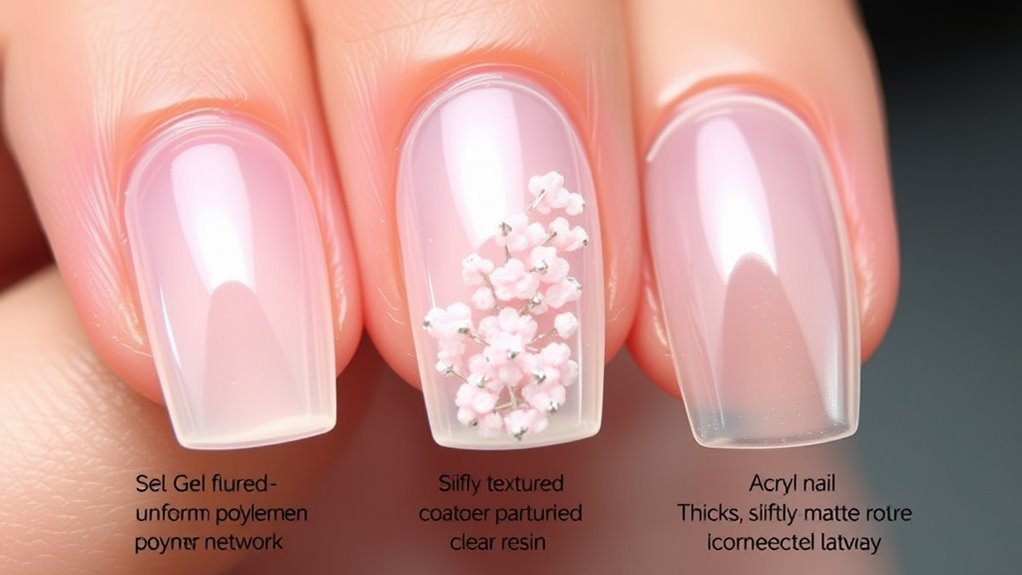
Chemical reactions and bonding mechanisms are at the core of how gel, dip, and acrylic nails achieve their durable and attractive finishes. In gel nails, chemical bonding occurs through photopolymerization, where UV or LED light triggers polymerization processes that solidify the gel. Dip nails rely on a fine layer of pigmented powder bonding to a base coat via chemical bonding, creating a strong, durable layer. Acrylic nails form through a polymerization process where liquid monomers mix with powder polymers, resulting in a hardened acrylic. To summarize:
Chemical bonding methods make gel, dip, and acrylic nails strong and long-lasting.
- Gel nails undergo photopolymerization, creating a flexible, strong bond.
- Dip nails utilize chemical bonding between powder and base coat.
- Acrylic nails form through polymerization of monomers and polymers.
Understanding these mechanisms helps you appreciate how each enhancement maintains durability and adhesion.
Strength, Flexibility, and Durability: How Each Enhancement Performs Over Time
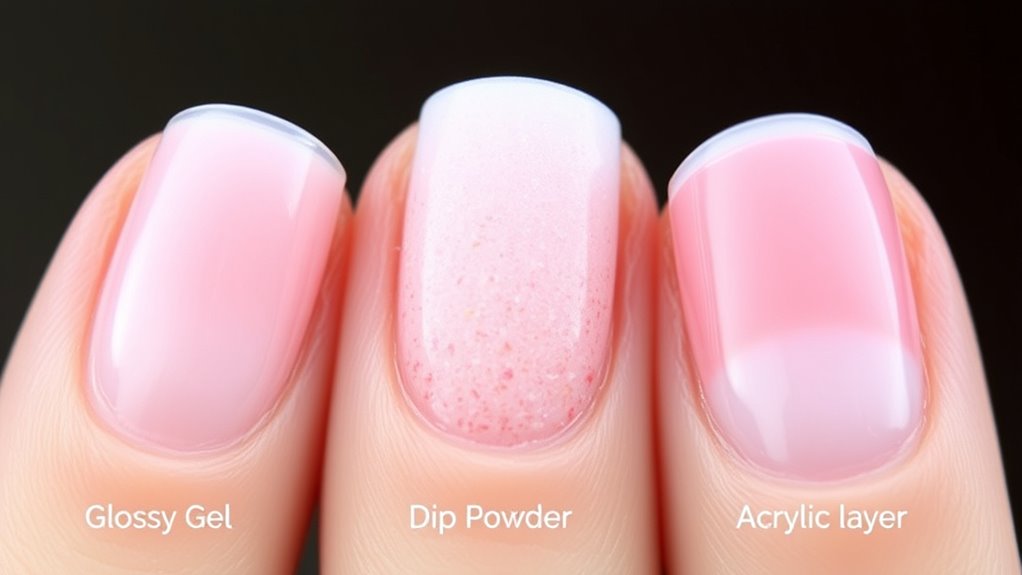
When it comes to lasting nail enhancements, your daily activities can impact their strength and flexibility. Some options resist breakage better over time, while others may show wear faster. Understanding how each enhancement handles regular use helps you choose the best fit for your lifestyle. Additionally, considering the flexibility of the material can influence comfort during movement and daily tasks.
Flexibility and Breakage Resistance
Flexibility and breakage resistance are essential factors to contemplate when evaluating nail enhancements, as they directly impact how well your nails withstand daily activities over time. A good flexibility comparison helps you understand which option is less prone to cracking or chipping. Generally, gel nails offer more flexibility, reducing breakage tendencies, while acrylics tend to be stiffer and more brittle. Dip powders fall somewhere in between, providing moderate flexibility. Here’s what you should consider:
- Gel nails bend more without cracking, offering better flexibility.
- Acrylics are less flexible, increasing breakage tendencies with impact.
- Dip enhancements have moderate flexibility but may still crack under stress.
Understanding the material properties, such as self-adhesion, can help you make more informed choices about which enhancement suits your lifestyle and nail health needs.
Choosing the right enhancement depends on your activity level and desired durability.
Long-Term Wear and Tear
Over time, the durability of your nail enhancements depends on how well they maintain their strength and flexibility under daily wear. UV exposure can weaken gels, reducing their nail longevity and leading to chipping or lifting. Dip powders generally hold up well, offering good durability without excessive UV sensitivity. Acrylics tend to be the most durable overall, resisting damage from everyday activities, but they can crack or lift if not properly applied or maintained. Flexibility varies: gels are more flexible, reducing breakage, while acrylics and dips are stiffer and more prone to cracking under stress. Proper care extends nail longevity, keeping your enhancements looking fresh longer. Additionally, understanding the long-term wear and tear can help you choose the best option for your lifestyle and ensure your nails stay beautiful over time.
Impact of Daily Activities
Your daily activities considerably influence how your nail enhancements hold up over time. The activity impact affects their strength, flexibility, and durability during daily wear. For example:
- If you’re frequently typing or using your hands, acrylics often resist chips better than gels or dips.
- For activities involving heavy lifting or manual labor, dip powders usually provide enhanced durability and flex more without cracking.
- If your routine includes frequent water exposure or cleaning, gels tend to stay flexible, reducing the risk of breakage.
- Additionally, understanding the material properties of each enhancement helps in predicting their behavior under different daily stresses.
Understanding how each enhancement responds to your daily wear helps you choose the best option. Consistent activity impact can cause wear and tear, but selecting the right enhancement can extend their lifespan and keep your nails looking great.
Potential Impacts on Natural Nails and Skin Health
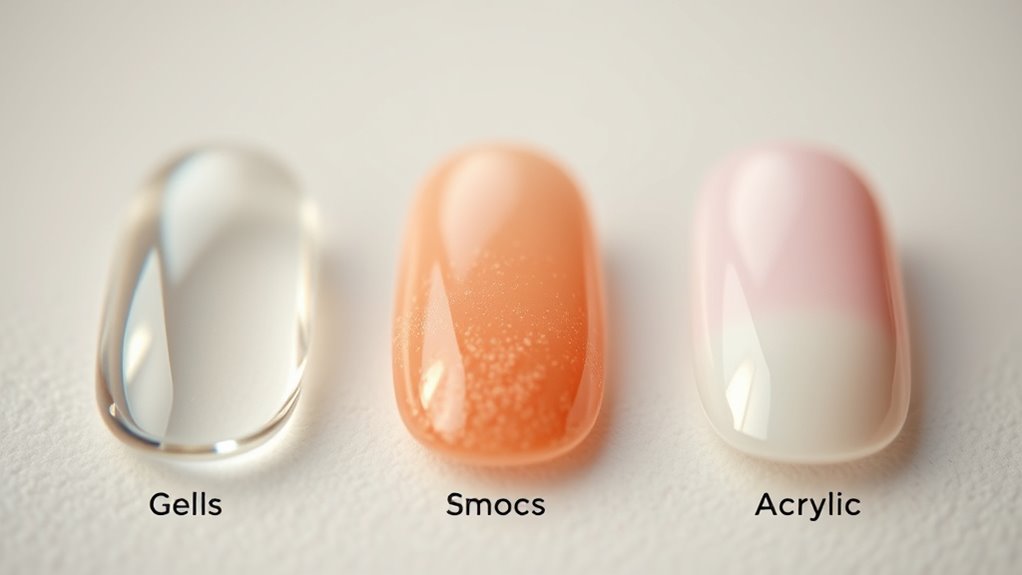
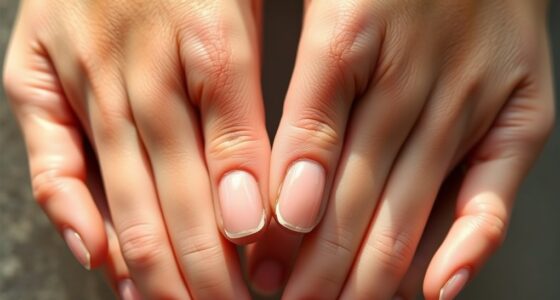
While nail enhancements can enhance your appearance, they may also pose risks to natural nails and skin health. Prolonged use of gels, dips, or acrylics can lead to nail discoloration, especially if removal isn’t done properly. This discoloration can be a sign of damage or infection beneath the surface. Additionally, some people may experience allergic reactions to the chemicals used in these products, such as acrylic monomers or certain adhesives. These reactions can cause redness, itching, or swelling around the nail beds and skin. Over time, repeated exposure might weaken your natural nails, making them more prone to breakage or thinning. To mitigate these risks, ensure proper application, regular breaks from enhancements, and seek professional removal when necessary. Many individuals attribute life changes to specific quotes from visionaries, which can inspire confidence and positive habits.
Choosing the Right Option Based on Lifestyle, Aesthetics, and Nail Care Needs
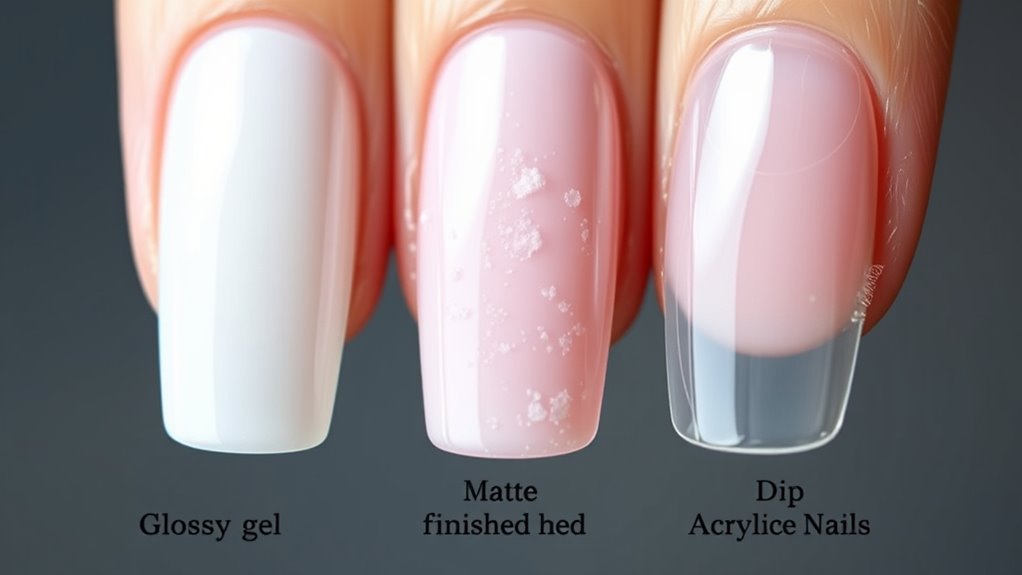
Choosing the right nail enhancement depends on your lifestyle, aesthetic preferences, and how much maintenance you’re willing to do. If you want minimal disruption to nail growth, gel nails are easier to remove with gentle removal techniques. For durability and longer-lasting wear, acrylics might be better, but they require stronger removal methods, like filing. Dip powders offer a middle ground with good nail growth support and manageable removal. Consider these factors:
Choose your nail enhancement based on lifestyle, maintenance, and desired durability for effortless beauty.
- Lifestyle: Active individuals may prefer dip or gel for quick fixes and easy removal.
- Aesthetics: Acrylics provide a natural look but need more upkeep.
- Nail care needs: Think about how often you’ll need removal techniques and if you’re comfortable with maintenance routines.
- Additionally, understanding the home improvement aspects of proper nail care can help maintain nail health and prevent damage over time.
Choose wisely to match your nail health, growth rate, and daily routine.
Frequently Asked Questions
Are Gel, Dip, and Acrylic Nails Safe for Sensitive Skin?
If you have sensitive skin, gel, dip, and acrylic nails can cause allergic reactions or worsen chemical sensitivities. It’s essential to choose products labeled hypoallergenic and work with a professional who understands your skin concerns. Always do a patch test before full application to check for reactions. If you experience redness, itching, or swelling, remove the nails immediately and consult a dermatologist to prevent further irritation.
How Long Does Each Nail Enhancement Typically Last?
You might think all nail enhancements last the same, but they actually vary quite a bit. Acrylics typically last 2-3 weeks with minimal maintenance, making them the most durable. Gel nails usually last about 2 weeks and require gentle upkeep. Dip nails often stay intact for 2-4 weeks, balancing durability and ease of maintenance. Your choice depends on how long you want them to last and how much upkeep you’re willing to do.
Can These Nails Be Removed Without Damaging Natural Nails?
You can remove these nails without damaging your natural nails if you use proper removal techniques. Avoid forceful peeling or picking, which can cause natural nail damage. Instead, soak your nails in acetone, gently lift the enhancement, and file away any residue. This careful process helps protect your natural nails from damage and maintains their health and strength after removal.
Do Different Brands or Products Affect the Safety of These Enhancements?
Different brands or products can impact the safety of your nail enhancements. Brand formulation varies, influencing how well ingredients work together, while product toxicity levels differ, affecting your natural nails’ health. Always choose reputable brands with low toxicity formulations, and check ingredient lists. This helps minimize risks like allergic reactions or damage, ensuring your nails stay healthy and strong. Being informed about these factors helps you make safer choices for your nail enhancements.
Which Nail Enhancement Is Best for Frequent Hand Washers?
If you wash your hands frequently, dip nails are your best bet. They offer superior durability compared to gel and acrylic, like a sturdy shield against water. Their moisture resistance helps prevent lifting or chipping, keeping your nails intact longer. Think of dip nails as a waterproof jacket—designed to withstand constant exposure to water, so your manicure stays fresh even with frequent handwashing.
Conclusion
Choosing between gel, dip, or acrylic nails is like finding your perfect style in a sea of options—you’ll want something that matches your lifestyle, aesthetic, and nail health. Understanding their differences helps you make an informed decision, so you can rock stunning nails without sacrificing your natural beauty. Remember, with the right choice, you’ll have nails that stand the test of time and turn heads faster than lightning. Your perfect manicure awaits—go ahead, make it unforgettable!